Here is a record of the workshops and courses we have run to date:
Courses
Doing Hope Together 4-part workshop (Facilitated by Clare Bonetree and Jay Wilkinson)
Resource yourself to engage with social change work. Overcome your overwhelm, burnout or despair and cultivate the resilience to turn towards hope-full collective action!
Doing Hope Together is a 4 part workshop to help you engage in social change work with a sense of direction and purpose. It is for people who have worked for a better world in the past, and want to develop the resilience to become involved again. It is also for people who feel overwhelmed or despairing and don’t know where to start.

Working for social change can be hard to sustain. The scale of the challenges facing the world right now can make us feel alone and ineffective. Difficulties within our groups and organisations can erode our capacity to cope.
For these and many other reasons we can become isolated and cynical or even despairing. Or in an effort not to go under, we may turn to a passive, ‘magical thinking’ kind of hope that says somehow things will get better all on their own – without any need for action.
But just as agency is the antidote to despair, this course works from the principle that hope is an active process – that “hope is something you do, rather than have”, as Joanna Macy puts it.

The course is held over 4 weekly sessions, moving progressively through the stages of the ‘active hope spiral’: – grounding in gratitude; learning to face what grieves us; finding a new way to see the world; and committing to take action, renewed. Between each meeting there’ll be an exercise to help you develop your own practice.
The most important part of this process is that we do it together. As we find a shared connection, we come to see that we are not alone, and that there are ways to overcome our barriers to action. As facilitators, we aim to create a supportive environment to work together and take care of each other.
Making Change Day School – 2 day workshop (Facilitated by Eleanor Fairbraida, Jay Wilkinson & Alice Cutler)
Do you want to make big changes in your own life, your community or the wider world? Do you have a project for social change you want to work on, but are unsure where to start? Are you campaigning on an issue but feeling unsure about what the next step should be? We make the road by walking but sometimes we are not sure what the next step should be! Using tools from systems thinking and permaculture, this two day workshop is a supportive space to share ideas, knowledge and experiences to try and move forward together.
Grow Your Edge – Weekend-long courses for people wanting to challenge injustice and bring about social change (Facilitated by Jay Wilkinson and Clare Bonetree).

Using permaculture design and working on our connection to nature, each other and ourselves, this course explores the action we need to take to make lasting change in our communities and the wider world. We’ll use some important ideas from permaculture, which means ‘permanent culture’ – the practice of working to create sustainable human cultures that live within the limits of the natural world. During the course, we’ll take time to observe some of the ways that nature works, and apply what we learn so that we can do our social change work in a healthier, more sustainable way.
Shorter Workshops
Why hasn’t it been possible to effectively tackle climate change?

The climate crisis looms large, yet the only factor that has ever impacted a (temporary) drop in overall emissions has been large scale economic crisis. This workshop looks at four of the major obstacles to effectively tackling climate change – climate capitalism, the state of politics, right-wing anti-climate interests leading to denialism and human psychological factors. In view of such devastating truths, where can we still find agency to take meaningful and impactful action? Facilitated by Adam Herriott and Jay Wilkinson
Non-Binary Micro-Fest
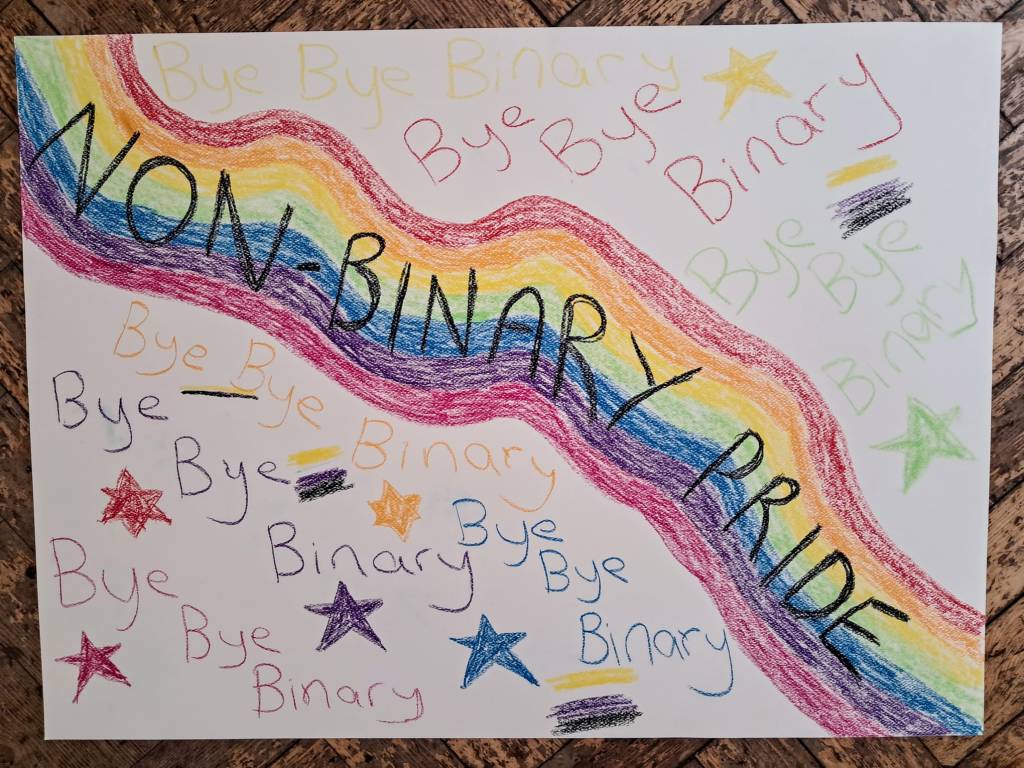
A co-created space for anyone fed up with binary gender norms! Working with the group’s desires and energy levels, we collaboratively design the day, which may include listening circles to engage with challenging questions, art spaces to create banners for demos, time for dancing, reflection, and general non-binary joy. Facilitated by Jay Wilkinson and Louie Howie.
Forum theatre on challenging access issues in Bristol’s transport system
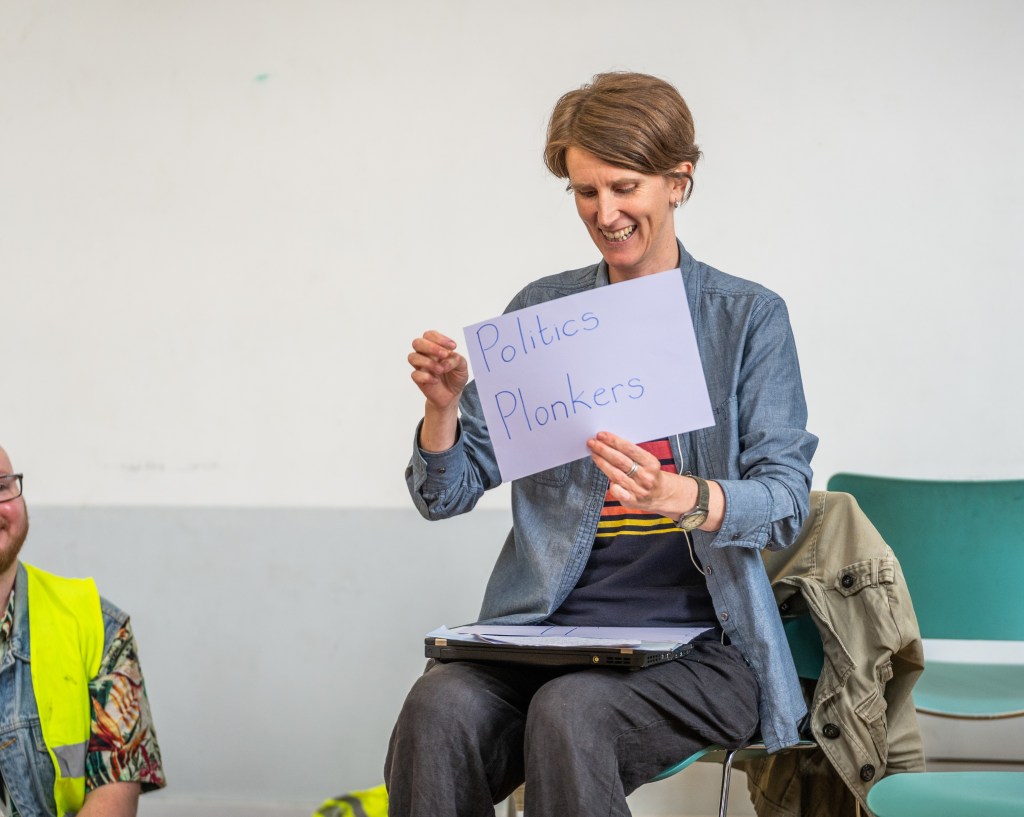

‘Forum theatre’ is a way of exploring how to tackle situations where people are being subjected to a power dynamic. Jay Wilkinson collaborated with Bristol Climate & Nature Partnership’s Community Climate Action project, which is working on achieving transport for Disabled people in Bristol that is both accessible and sustainable. Jay helped to develop the script for the theatre, which focussed on the bus system, gave an interactive talk on understanding the barriers that prevent accessible transport, and played the roles of some of the actors who end up discriminating against Disabled people, whether directly or indirectly. The day brought together Disabled people from a range of backgrounds to explore this theme.
Doing Hope (since 2018)

Facilitated by Clare Bonetree, Doing Hope workshops were the precursor to Doing Hope Together (see above), providing an introduction to Joanna Macy’s ‘Work that Reconnects’ and the ‘Active Hope Spiral.’ 60 and 90 minute Doing Hope workshops have been run face to face with Quaker peace activists protesting arms fairs, and online with permaculture students. You can run your own Doing Hope workshops by downloading this zine. Find the toolkit for screen readers here Doing Hope toolkit for screen readers.
Coronavirus Experts 2020
Led by Clare Bonetree and supported by Jay Wilkinson, Coronavirus Experts brought together Disabled people in two online discussion groups during the first lockdown in 2020, to talk about our skills for resilience that could be helpful for non-Disabled people coping with restrictions on their lives imposed by Covid-19. You can view the zine from the project here.
Effective Ways of Responding to Our Privilege: How do we redistribute wealth and power?
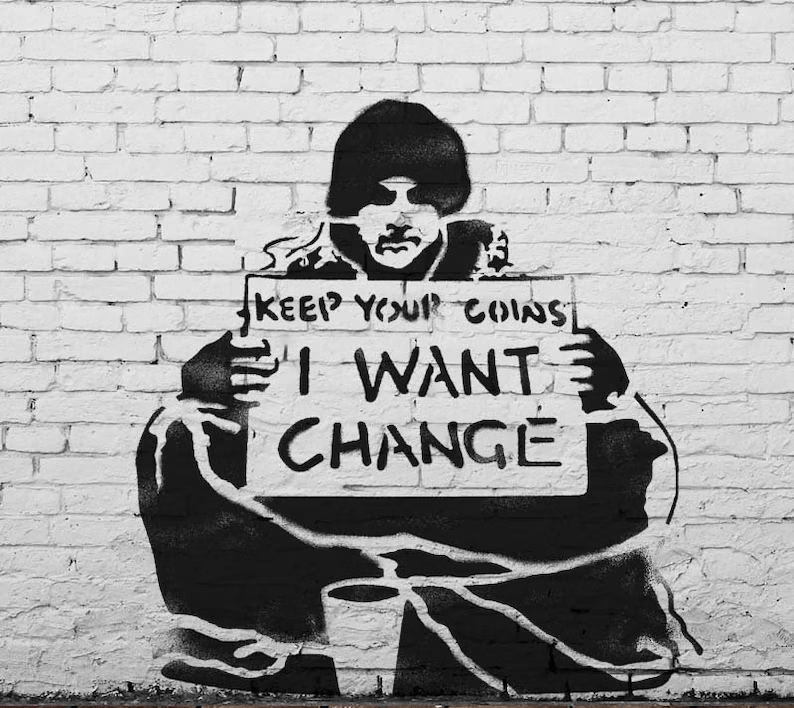
This workshop is for people who have more wealth than they need to survive, and feel uncertainty about how best it could be used. It is part of the work of Bristol Redistro, which raises money from people who have more than they need to get by, and redistributes it to grassroots groups working for social change. The workshop is an opportunity to learn and share in a non-judgmental, participatory setting, where we consider the privileges and access to resources that we have, think about how best to use them, and work on breaking down our barriers to doing so. Facilitated by Ryan Davey and Jay Wilkinson.
Introduction to somatics for activists
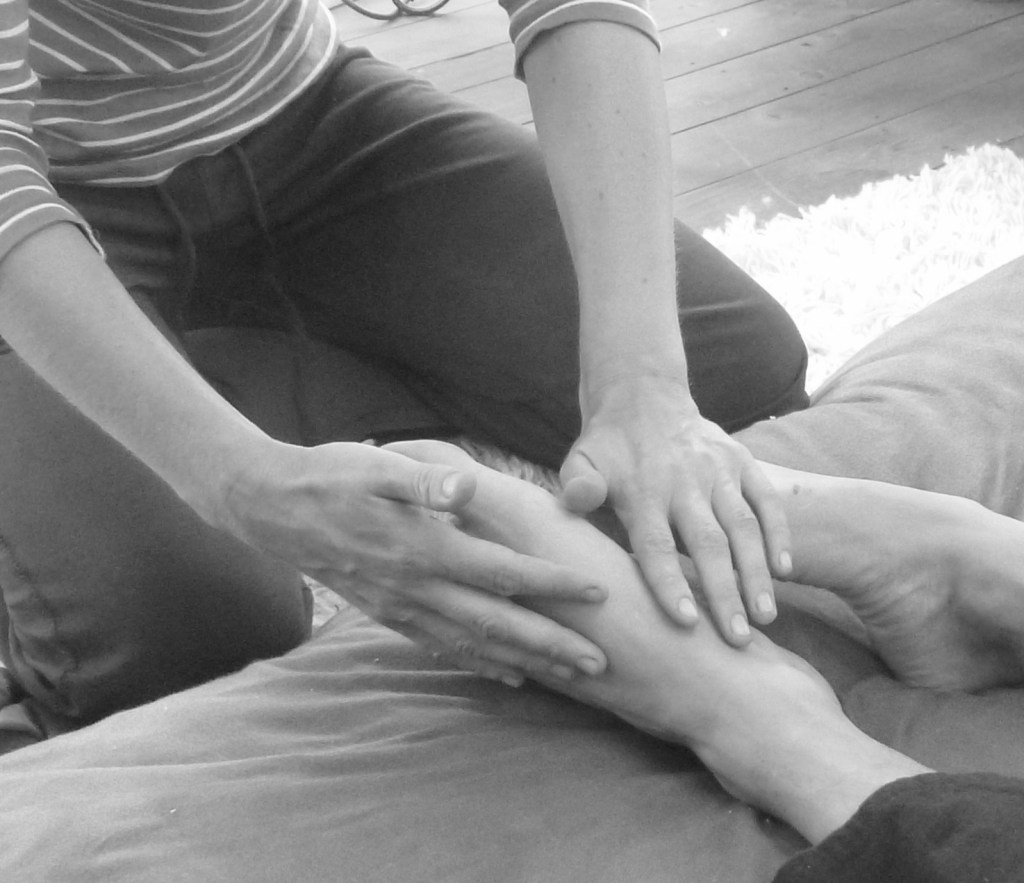
This workshop was run by Jay Wilkinson, who is a qualified bodyworker through the practice of Shiatsu, and has been exploring ‘Body Informed Leadership.’ We live in a culture where we tend to separate out mind and body, meaning that we frequently repress feeling and emotion, which may then burst out in ways that cause harm. This can become heightened for activists tackling extreme situations of conflict or oppression. Somatics is about the practice of consciously paying attention to what is happening in our bodies, which act as information for what we need. We then have more space for choice in our behaviours, and can find ways to regulate our nervous systems and avoid trauma becoming embedded in the body when we have been dealing with very stressful situations.
How to build mass movements: the need for organizing to make a comeback
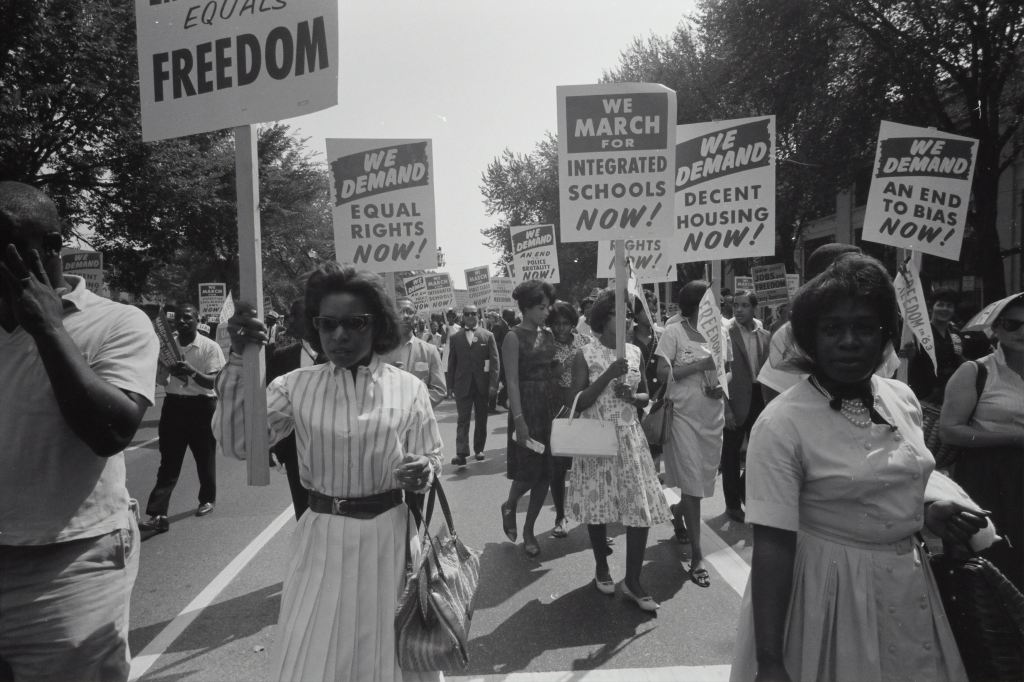
For several decades, the main way of trying to achieve social change has been through ‘mobilising’ rather than ‘organizing.’ Although both are important to social change, mobilizing on its own is limited – it persuades people who already agree with an issue to ‘get off the couch’ to do something about it – that is, until they burn out and can’t take action anymore. Organizing is different: it expands the base of people who are involved, by engaging with people who may initially actively disagree with leftist thinking, to build relationships and meaningful solidarities. This must be done with the aim of engaging majorities of people, rather than just getting the usual suspects involved. When the base then mobilizes for action, it does so in far greater numbers. The early 20th Century trade union struggles and the U.S. Civil Rights movement of the 1950s and 1960s, plus other struggles around the world have been rooted in organizing, with huge successes. In this workshop, we look at the value of organizing skills, the reason these skills have been lost, and how we might regain them to help build mass movements for change. Facilitated by Adam Herriott and Jay Wilkinson.
Overcoming Our Internal Neoliberal Monster

Across the world, neoliberalism has been the dominant way of organizing economically, socially and politically for the past three decades. It shapes all our lives and even our ways of thinking. Of course, we may be highly critical of a growth-based economy in which capital and corporations are freer than ever to do as they will. At the same time, we can’t help but internalize this overpowering ideology, shaping the way that we feel we can or can’t take action. We receive the message from neoliberalism that, ‘you can achieve anything if you try hard enough,’ and then internalize feelings of inadequacy when we find we hit invisible barriers. We know that things are getting worse, but we feel there’s nothing we can do to really change anything, because we’ve come to understand that ‘there is no alternative.’
This workshop seeks to deconstruct the beliefs that are holding us back and to begin to build a new framework together for going forth in the world. Facilitated by Adam Herriott and Jay Wilkinson.
Overcoming the shame of making mistakes when doing anti-racist work
Being committed to anti-racist work as a white person means doing your best not to make mistakes that stem from your privileges, as mistakes often impact people of colour adversely. But the nature of blind-spots means that mistakes will be made. To remain committed to working in solidarity means facing up to the shame of having made a mistake, processing it, and working out how to do better next time. If we don’t do this, we either continue to make the same blunders, or we feel overwhelmed by the shame and draw back from being so involved. This workshop is a confidential space that uses ‘Shame Resilience Theory’ to address shame and prevent it being in the driving seat. Facilitated by Jay Wilkinson.
What does a real democracy look like?
We all have criticisms of how our democratic system works – ineffective, corrupt, elitist. Is our current democratic system really as good as it gets? This workshop looks at how democracy has evolved in stages – and only through people fighting for it. We’ll then look at examples from around the world of how democracy can work more effectively in practice. We’ll also consider if it’s possible to have a form of democracy that can work without the need for the nation state. The final stage of the workshop will bring participants to think about what kind of democracy they’d like to see in the future – and consider if the time has come to struggle for better democratic institutions. Facilitated by Jay Wilkinson and Adam Herriott.
Exploring Uncertainty for a Better Feminism
[Jay worked as part of the Dandelion Collective with Sage Brice and Scarlet Hall to develop these workshops in response to the intensity generated around the Gender Recognition Act Consultation of 2018].
Do you find trans politics upsetting or confusing?
Do you have concerns about the possibility of the new Gender Recognition Act, but have feared speaking out because you don’t want to be called transphobic?
Do you want to understand transphobia better so that you can communicate your concerns without causing harm to trans people?
In this workshop, we start from the position that transphobia is within us all, to varying extents. Undoing this socialisation involves ongoing reflection and processing. It is also understandable that some people have fears and concerns about possible changes to gender and sex legislation, and want a space to discuss them safely. We think it is possible to have these conversations without causing harm to trans people – if we can learn to do so without de-legitimising trans people’s lives and experiences.
This workshop is a space for three things: to be heard, to hear about trans experiences, and to learn more about how transphobia works.
The future of popular/political education
An exploration of the importance of popular/political education, first defining them and then collectively examining how they are currently used and to what effect. We ask the question: why is it so difficult to find space/time/resources for popular/political education, and how can we create spaces in which people outside of alternative scenes can access these ideas? Facilitated by Jay Wilkinson and Adam Herriott.
Democracy Anywhere
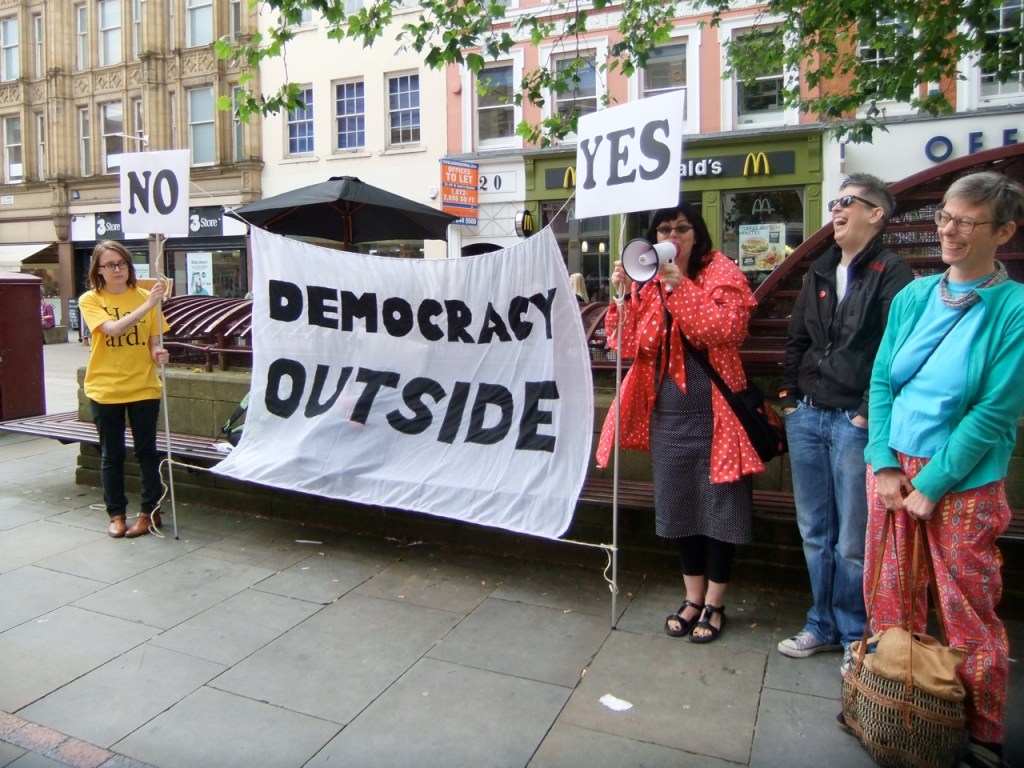
The purpose of ‘Democracy Anywhere’ is to create much needed open spaces for airing viewpoints and working out directions of travel to make the world a fairer and more sustainable place. This is a ‘pop up democracy’ combination of art and politics based on a spectrum line game of ‘yes’ at one end, ‘no’ at the other and ‘maybe’ in the middle. It is guided by the following questions: what are the problems? What needs to happen to resolve them? How do we need to get there? Participants ask yes/no questions and make statements of opinion in relation to the guiding questions. Everyone involved places themselves along the spectrum line according to their opinion and discusses in a way that allows everyone involved to develop their ideas. Democracy Anywhere was run by Jay Wilkinson, based on Clare Bonetree’s Democracy Outside, which travelled around England in 2012 and happened again in 2016.
Relight your fire – social change is our only desire
Working for social change is hard to maintain – in a world of such rapid change, the task can feel too overwhelming to know where to start, or once started, we may come to feel ineffective and isolated, leading us to disengage or become burnt out. How can we overcome our overwhelm and continue to engage in social change work with a sense of direction and purpose? Facilitated by Jay Wilkinson, Alice Cutler & Eleanor Fairbraida.
Growing the seed of your ideas for social change
Using permaculture design, this workshop will work on how to make the seed of your ideas for social change grow and thrive, by looking at the conditions that the seed of your ideas will grow in, what your seed needs to sustain growth, and how to avert potential threats to health and development. Facilitated by Jay Wilkinson, Alice Cutler & Eleanor Fairbraida.
What is base-building?
Too many of us on ‘the left’ have ended up in an activist bubble, abandoning the communities that used to be the core of our movement. How can we overcome this problem? Base-building is about long-term strategy, organizing the unorganized, and providing a route to more people become organizers for change in their communities. Facilitated by Adam Herriott and Jay Wilkinson.
 Making Change Collective
